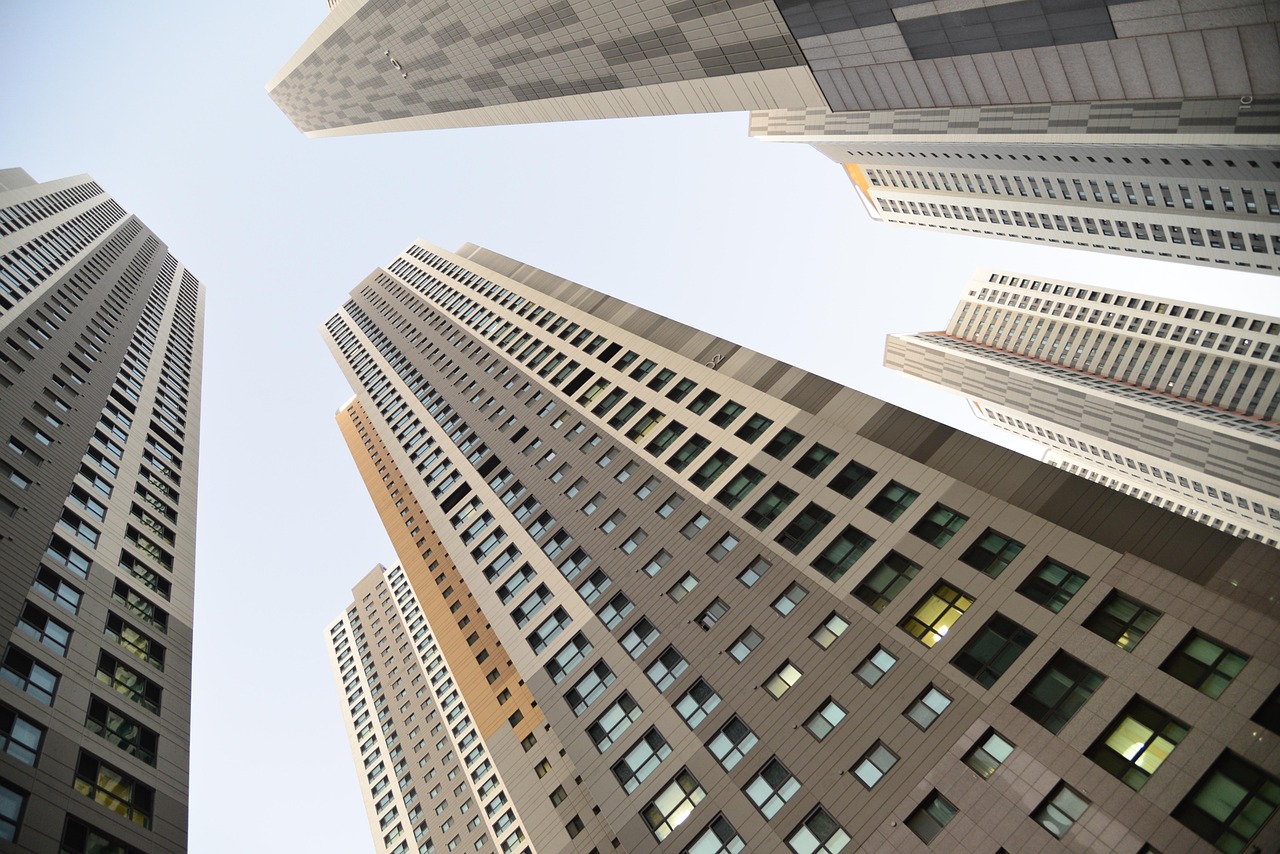

Flat roofs, ribbon windows, and exposed concrete are more than a look; they are the result of 20th‑century innovations like reinforced concrete frames and curtain walls that decoupled structure from skin. By the 1950s, buildings such as the Seagram Building and Unité d’Habitation scaled these ideas from villas to cities, promising speed, flexibility, and access to light and air.
If you came here asking “What is modern architecture,” the short answer is: a 1910s–1970s movement that replaced load‑bearing walls with structural frames, pursued standardized parts and functional plans, and treated ornament as unnecessary. Below is the working logic, trade‑offs, and how to apply or critique it with concrete criteria.
Definition And Origins
Modern architecture emerged in the early 20th century as industrialized materials steel, reinforced concrete, plate glass made long spans and open plans economical. Instead of thick masonry carrying loads, a frame took the gravity and lateral forces, and non-structural “curtain walls” enclosed the space. This shift enabled massing with cantilevers, ribbon windows, and deep overhangs while reducing interior partitions.
Ideologically, “form follows function” guided decisions: structures should express how they work, plans should follow use, and decoration not derived from purpose should be eliminated. Between 1919 and 1933, the Bauhaus taught standardized components and modular grids; Le Corbusier codified “five points” (pilotis, free plan, free facade, horizontal windows, roof garden). After 1945, war reconstruction and mass housing programs spread the approach globally.
Modernism was not monolithic. Mies van der Rohe’s steel-and-glass minimalism (Farnsworth House, Seagram) differs from Brutalism’s heavy concrete (Boston City Hall). Tropical modernism adapted deep shading and cross-ventilation for humid climates, while Nordic variants emphasized daylight and timber-concrete hybrids. The unifier is the frame-plus-envelope logic and an ethic of functional clarity.
1932 MoMA “International Style” exhibition (Hitchcock & Johnson): positioned modern architecture as volume over mass, regularity over symmetry, and avoidance of applied ornament.
How It Works: Structure, Envelope, And Plan
Structure. Modern buildings use repetitive grids to simplify fabrication and planning. Typical office grids range 7.5–9.0 m between columns or walls; residential can be tighter (5–7.5 m) to align with unit widths. Floor-to-floor heights often fall between 3.3–3.9 m in offices to fit structure (200–400 mm slabs), services (300–600 mm), and ceilings. Serviceability limits (e.g., L/360 deflection for floors) govern depth and vibration comfort. Steel frames need fireproofing; concrete provides inherent fire resistance but increases dead load.
Envelope. Curtain walls decouple structure from facade, allowing large glazing but imposing energy and maintenance constraints. Double glazing typically achieves U-values around 1.6–2.8 W/m²·K; triple glazing can reach 0.6–1.2 W/m²·K (values vary by spacer, gas, and frame). Solar heat gain coefficients (SHGC) of 0.25–0.40 manage cooling loads. Window-to-wall ratios (WWR) above roughly 60% often increase energy use in most climates unless paired with excellent glazing, external shading, and high-efficiency HVAC.
Plan. The “free plan” leverages the grid: fewer interior load-bearing walls, more demountable partitions. In offices, 8–12 m lease depths balance daylight with efficient layouts; beyond ~12 m, daylight quality drops and electric lighting and ventilation loads rise. Wet cores (stairs, elevators, toilets, risers) cluster for efficiency. Flat roofs create usable terraces but demand rigorous water management; expect 1:40 minimum slope, two-stage drains, and membrane replacement cycles of roughly 20–30 years.
Human And Environmental Performance
Daylight and comfort. Modernism’s large windows can deliver 300–500 lux across much of a plan within ~7–9 m of facades, reducing lighting energy. The trade-off is glare and overheating without exterior shading or light shelves. Effective strategies include external louvers tuned to solar altitude, low‑iron glass only where visual clarity is critical, and interior finishes with 0.6–0.8 reflectance to bounce daylight deeper while controlling contrast. Acoustically, open plans benefit from ceiling NRC ≥0.7 and background sound around 40–45 dBA for speech privacy.
Ventilation and density. Functional plans support varied occupancy: offices typically design for 8–12 m²/person; classrooms 1.5–2.5 m²/student; housing far less per occupant. Ventilation targets commonly range 6–10 L/s per person for good IAQ, with demand control via CO₂ sensors to cut fan energy. Cross-ventilation in temperate climates can meet comfort for part of the year if operable windows, stack paths, and night-flush mass are integrated; without this, fully glazed facades push reliance onto HVAC.
Carbon and energy. Buildings account for roughly 30–40% of energy-related CO₂ emissions globally when operations and materials are combined; modernism’s materials matter. Cement manufacture contributes about 7–8% of global CO₂. A cubic meter of conventional concrete typically embodies on the order of 250–350 kg CO₂e (mix and grid carbon intensity vary). Steel’s intensity encourages efficient spans and substitution where feasible. Operationally, reducing WWR from 70% to 40% in a midrise office can cut annual HVAC energy 10–25% depending on climate and controls.
Why It Succeeded And Where It Failed
Modernism excelled where its assumptions matched reality: needs for rapid construction, adaptable interiors, and standardized components. Curtain walls and modular grids reduced erection time; open plans allowed decades of churn without moving structure. Examples like the Seagram Building and the Barbican demonstrate long service life via robust structure and flexible planning. Adaptive reuse thrives in such buildings because perimeter structure and large spans accommodate new cores and services.
Failures often came from universalizing a single solution. All‑glass facades in hot climates drove high cooling loads and glare; thin envelopes in cold regions caused condensation and thermal discomfort. Social housing megablocks isolated residents from mixed uses and street life. The demolition of Pruitt–Igoe in 1972 became a shorthand for modernism’s social failures, though evidence is mixed on whether design or broader policy and economic forces were primary drivers. Flat roofs without redundancy leaked; poorly detailed concrete spalled as rebar corroded.
Language matters. “Modern” in everyday speech can mean “current,” but in architecture it names a historical movement with specific principles. Contemporary practice is eclectic: some projects retain modernist clarity while adding passive design, thick insulation, timber hybrids, or climate-specific shading. The best contemporary uses of modern ideas are selective: they keep the rational grid and functional planning while abandoning one‑size‑fits‑all glass boxes and embracing local climate and culture.
Applying Modern Principles Today
Start with performance, then compose. Use structural grids that match program and material: 7.5–9 m for offices (steel or post‑tensioned concrete), 6–7.5 m for housing to align with unit widths and bathrooms stacking. Target floor-to-floor heights that fit present and future services; 3.6–3.9 m in offices offers resilience for future HVAC upgrades and raised floors. Where long spans are unnecessary, shorter bays cut embodied carbon and cost.
Envelope decisions should be quantitative. Aim for WWR of 35–50% in most climates unless a compelling use case and budget support higher-performance glazing and shading. Set glazing performance targets based on climate: colder zones prioritize U ≤1.0 W/m²·K and airtight frames; hotter zones prioritize SHGC ≤0.30 with exterior shading. Use thermal breaks at balconies and slab edges; detail for continuous insulation (ψ-values matter) to prevent condensation and mold.
Plan for operations and maintenance on day one. Choose facade systems with known sealant life (often 15–25 years) and accessible replacement details. Provide roof fall protection and clear drainage pathways to prevent ponding. In mixed-mode buildings, coordinate manual window operation with HVAC lockouts to avoid energy penalties. Commissioning and post-occupancy evaluation should be budgeted (e.g., 0.5–1% of construction) to close the loop between intent and performance.
Conclusion
To decide whether modern architecture’s logic fits your project, ask: Does a rational frame and free plan improve adaptability? Can the envelope hit a 35–50% WWR with robust shading and U/SHGC targets suited to climate? Are structure and services sized for change (3.6–3.9 m floor-to-floor in offices, 7.5–9 m grids)? If yes, you can get the clarity modernism promised without inheriting its failures by measuring performance first and letting form follow verified function.